Fueling and Lauch
Tuesday, June 5, 2012

Fri., Jun. 8, 2012
Warm-ups: Last day of regular classes
Objectives:
Announcements: Fueling and Lauch next class
Are you ready?
Objectives:
Announcements: Fueling and Lauch next class
Are you ready?
Mass out Zn & MnO2
Finish up all assignments
Thurs., Jun.7, 2012
Warm-ups: Rocket fueling and launch on Mon.
Objectives:
Announcements: 2 Days to go!
Finish final exam
Finish up all assignments
Objectives:
Announcements: 2 Days to go!
Finish final exam
Finish up all assignments
Wed., Jun. 6, 2012
Warm-ups: None
Objectives:Exam Time
Announcements: 3 Days to go!
Final Exam for All
Objectives:Exam Time
Announcements: 3 Days to go!
Final Exam for All
Thursday, May 31, 2012
Tues., Jun. 5, 2012
Objectives:Exam Time
Announcements: 4 Days to go!
Final Exam for All
Mon., Jun. 4, 2012

Objectives: Prepare for rocket fueling
Announcements: 5 Days to go!
Show me your Rocket Analysis & sketches
Here's a little Rocket Fun for you...
Fri., Jun. 1, 2012
Warm-ups: At 25 C & 788 mm Hg, it's a temperate day at the Oregon coast. My standard SCUBA tank contains 250 moles of diving gases at 20,000 kPa. My standard breath volume is 750 mL. How many breaths can I take from the tank while I'm still at or near the surface?
Objectives: Apply gas laws to our study of Stoichiometry
Announcements: Everyone takes the final exam with seniors
Hand in your Popcorn Lab analysis
Rocket fueling equations
I'd rather have them today!
Objectives: Apply gas laws to our study of Stoichiometry
Announcements: Everyone takes the final exam with seniors
Hand in your Popcorn Lab analysis
Rocket fueling equations
I'd rather have them today!
Wednesday, May 30, 2012
Thurs., May 31, 2012
Warm-ups: 5.11 g of SO2 reacts with 9.44 grams of PN in a double displacement reaction. Which reactant will be all used up?
Objectives: Apply gas laws to our study of Stoichiometry
Announcements: 8 Days to go!
Hand in your Popcorn Lab analysis
Rocket fueling equations
Objectives: Apply gas laws to our study of Stoichiometry
Announcements: 8 Days to go!
Hand in your Popcorn Lab analysis
Rocket fueling equations
Rocket Analysis & sketches due Monday
Friday, May 25, 2012
Wed., May 30, 2012
Warm-ups: When fueling H2 and O2 rockets, the temperature in the lab was 21 degrees Celcius and the atmospheric pressure was 104.8 kPa. Explain how this will affect fueling of your rocket.
Objectives: Apply gas laws to our study of Stoichiometry
Announcements: 9 Days to go!
Popcorn analysis
Rocket fueling equations
Objectives: Apply gas laws to our study of Stoichiometry
Announcements: 9 Days to go!
Popcorn analysis
Rocket fueling equations
Rocket Analysis & sketches due Monday
Tues., May 29, 2012
Warm-ups: None
Objectives: What pressure causes popcorn to pop?
Announcements:
Popcorn Lab:
Rocket fueling equations
Objectives: What pressure causes popcorn to pop?
Announcements:
Popcorn Lab:
Revisit procedures
Do not burn the popcornRocket fueling equations
Thursday, May 24, 2012
Fri., May 25, 2012
Warm-ups: How much pressure is needed in order to pop corn? Corn pops when the pressure of the water inside turning into a gas is greater than the "hardness" of the shell. What factors are needed to answer the question? In other words, what must you know to calculate the pressure?
Objectives: Apply gas laws to our study of Stoichiometry
Announcements: Got your rocket?
STRAWS!
Rocket fueling equations
Objectives: Apply gas laws to our study of Stoichiometry
Announcements: Got your rocket?
STRAWS!
Sample calculations (Stoich with gases)
When Manganese Dioxide reacts with hydrogen peroxide it produces manganese monoxide, water and oxygen gas. What mass of manganese dioxide will be needed to generate 250 mL of oxygen gas at 42 degrees Celsius if the atmospheric pressure in the lab is 788 Torr?Rocket fueling equations
Thurs., May 24, 2012
Warm-ups: One mole of any gas takes up 22.4 Liters at STP. What volume will 1 mole of CO2 gas occupy at 35 degrees Celcius and 34 psi?
Objectives: Apply gas laws to our study of Stoichiometry
Announcements: Rocket finished and in class
by tomorrow (no grade for construction if late)
Avodadro's Hypothesis
4000 grams), how many liters of carbon
dioxide would be produced at a temperature
of 21.0 °C and a pressure of 1.00 atm?
Rocket fueling equations
Objectives: Apply gas laws to our study of Stoichiometry
Announcements: Rocket finished and in class
by tomorrow (no grade for construction if late)
Avodadro's Hypothesis
Sample calculations (Stoich with gases)
If you burned one gallon of gas (C8H18) (approx. 4000 grams), how many liters of carbon
dioxide would be produced at a temperature
of 21.0 °C and a pressure of 1.00 atm?
Rocket fueling equations
Tuesday, May 22, 2012
Wed., May 23, 2012
Warm-ups: Your rocket,
made from a 500 mL bottle will have 0.5 moles of water vapor when the H2
and O2 combine. The process momentarily generates a temperature of 300
K. What pressure is causing your rocket to launch?
Objectives: Apply gas laws to our study of Stoichiometry
Announcements: Rocket finished and in class
by Friday
Avodadro's Hypothesis
4000 grams), how many liters of carbon
dioxide would be produced at a temperature
of 21.0 °C and a pressure of 1.00 atm?
Rocket fueling equations
Objectives: Apply gas laws to our study of Stoichiometry
Announcements: Rocket finished and in class
by Friday
Avodadro's Hypothesis
Sample calculations (Stoich with gases)
If you burned one gallon of gas (C8H18) (approx. 4000 grams), how many liters of carbon
dioxide would be produced at a temperature
of 21.0 °C and a pressure of 1.00 atm?
Rocket fueling equations
Thursday, May 17, 2012
Tues., May 22, 2012
Warm-ups: Car tires don't change much in volume between being hot and cold but the pressure changes dramatically. You fill your tires in the winter. It's 0 degrees Celcius and your tires take 35 psi. In the summer on the roads at high speed those tires might reach 77 degrees Celcius. What tire pressure would be the result of this new set of conditions?
Objectives: Apply gas laws to our study of Stoichiometry
Announcements: 14 school days left!
Rocket finished and in class
by Friday
Rocket Project -
Your completed rocket must be in class
by Friday
Avodadro's Hypothesis
4000 grams), how many liters of carbon
dioxide would be produced at a temperature
of 21.0 °C and a pressure of 1.00 atm?
Rocket fueling equations
Objectives: Apply gas laws to our study of Stoichiometry
Announcements: 14 school days left!
Rocket finished and in class
by Friday
Rocket Project -
Your completed rocket must be in class
by Friday
Avodadro's Hypothesis
Sample calculations (Stoich with gases)
If you burned one gallon of gas (C8H18) (approx. 4000 grams), how many liters of carbon
dioxide would be produced at a temperature
of 21.0 °C and a pressure of 1.00 atm?
Rocket fueling equations
Mon., May 21, 2012
Warm-ups: Mikayla is off for a jaunt in her hot air balloon. To lift off , the gas in a hot air balloon was heated to 350 K. (atmospheric pressure was "standard") The balloon had a volume of 250,000 L. At 2500 ft, the atmospheric pressure tapered off to 80 kPa. Because of this the balloon expanded to 260,000 L and the temperature cooled. The gas temperature has to be 350 K to ascend. By how much will she have to heat the gas to allow the balloon to continue to rise?
Objectives: Analyze the behavior of gases
Announcements: 15 school days left!
Rocket Project -
Your completed rocket must be in class
by Friday
Avodadro's Hypothesis
4000 grams), how many liters of carbon
dioxide would be produced at a temperature
of 21.0 °C and a pressure of 1.00 atm?
Objectives: Analyze the behavior of gases
Announcements: 15 school days left!
Rocket Project -
Your completed rocket must be in class
by Friday
Avodadro's Hypothesis
Sample calculations (Stoich with gases)
If you burned one gallon of gas (C8H18) (approx. 4000 grams), how many liters of carbon
dioxide would be produced at a temperature
of 21.0 °C and a pressure of 1.00 atm?
Fri., May 18, 2012
Warm-ups: Annular Solar Eclipse, Sunday
Objectives: Analyze the behavior of gases
Announcements: 16 school days left!
Combined Gas Laws
"Ideal Gases"
Ideal Gas Law
Ideal gas constant
Standard Molar Volume
Sample calculations (Stoich with gases)
Objectives: Analyze the behavior of gases
Announcements: 16 school days left!
Combined Gas Laws
"Ideal Gases"
Ideal Gas Law
Ideal gas constant
Standard Molar Volume
Sample calculations (Stoich with gases)
Wednesday, May 16, 2012
Thurs., May 17, 2012
Warm-ups: A sample of N2 gas at STP has a volume of 22.4 Liters. What volume will it have when it's temperature is raised to 290 K?
Objectives: Analyze the behavior of gases
Announcements: 17 school days left!
Combined Gas Laws
"Ideal Gases"
Ideal Gas Law
Ideal gas constant
Standard Molar Volume
Sample calculations (Stoich with gases)
Objectives: Analyze the behavior of gases
Announcements: 17 school days left!
Combined Gas Laws
"Ideal Gases"
Ideal Gas Law
Ideal gas constant
Standard Molar Volume
Sample calculations (Stoich with gases)
Tuesday, May 15, 2012
Wed., May 16, 2012
Warm-ups: Standard Temperature & Pressure
Objectives: Analyze the behavior of gases
Announcements: 18 school days left!
Gas Laws:
- Boyle's Law
- Charles' Law
- Pressure Law
Combined Gas Laws
Ideal Gas Law
Ideal gas constant
Standard Molar Volume
Sample calculations (Stoich with gases)
Tuesday, May 8, 2012
Tues., May 14, 2012
Warm-ups: Pressure equivalents:
14.7 psi = 101.3 kPa = 1 atm = 760 mm Hg = 760 Torr

Objectives: Analyze the behavior of gases
Announcements: 19 school days left!
Temperature scales:

Gas Laws:
14.7 psi = 101.3 kPa = 1 atm = 760 mm Hg = 760 Torr
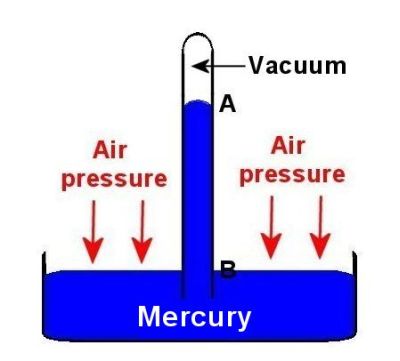
Objectives: Analyze the behavior of gases
Announcements: 19 school days left!
Temperature scales:

Gas Laws:
- Boyle's Law
- Charles' Law
- Pressure Law
Mon., May 14, 2012
Pop Quiz for all those absent on Friday
Objectives: Analyze the behavior of constrained
gases
Announcements:
Play with this applet...
Now click on...
Describe the lab in a textbox
Labels, title, curve fit, print mathematical
relationship on your graph
Objectives: Analyze the behavior of constrained
gases
Announcements:
Play with this applet...
Now click on...
Collect data by dragging the plunger
Record data (at least 10 data points
spread between the range)
graph the data using Graphical AnalysisDescribe the lab in a textbox
Labels, title, curve fit, print mathematical
relationship on your graph
Fri., May 10, 2012
Warm-ups: In the photosynthesis reaction 15 grams of CO2 and 7 g of water are combined. Which is the limiting reactant?

Objectives: Analyze the behavior of constrained
gases
Announcements:
Gas Laws

Objectives: Analyze the behavior of constrained
gases
Announcements:
Gas Laws
- Boyle's Law
- Charles' Law
- Gay-Lussac's Law
Thurs., May 10, 2012
Warm-ups: In the photosynthesis reaction shown below, how many moles of glucose will be produced from 0.3 moles of CO2 and 0.6 moles of water?
Objectives: Analyze the behavior of constrained
gases
Announcements:
Temperature scales & pressure units
Behavior of constrained gases
Objectives: Analyze the behavior of constrained
gases
Announcements:
Temperature scales & pressure units
Behavior of constrained gases
Friday, May 4, 2012
Tues., May 8, 2012
Warm-ups: Describe how you would know which substance in a reaction will be the limiting reagent?
Objectives: Finalize lab reports
Announcements:
If I were to have 0.4 moles of ZnS and 0.2 moles of
Temperature scales & pressure measurement
Objectives: Finalize lab reports
Announcements:
If I were to have 0.4 moles of ZnS and 0.2 moles of
NaI, which would limit how much ZnI2 could be made?
ZnS + NaI = Na2S + ZnI2Temperature scales & pressure measurement
Mon., May 7, 2012
Warm-ups: 22.0
grams of LiCl is added to 19.0 grams of Zn3N2. Which substance is the limiting reactant?
Objectives:
Announcements: Graded lab reports
Limiting and Excess Reactants In today's warm up, What mass of each product can be made? What mass of the excess reactant will be left over?
Temperature scales & pressure measurement
Objectives:
Announcements: Graded lab reports
Limiting and Excess Reactants In today's warm up, What mass of each product can be made? What mass of the excess reactant will be left over?
Temperature scales & pressure measurement
Fri., May 4, 2012
Warm-ups: 14.3 grams of CuCl2 is added to 18.9 grams of Al2(SO4)3. Which of these reactants runs out first (In other words, which is left over in the end)?
Objectives: Finalize lab reports
Announcements: Final lab reports due
by end of the periodFinishing touches
Objectives: Finalize lab reports
Announcements: Final lab reports due
by end of the periodFinishing touches
Wednesday, May 2, 2012
Thurs., May 3, 2012
Warm-ups:
When scandium sulfate combines with a nitride, aluminum sulfate is
produced. Write the balanced equation for this reaction. If you wanted
to get 7 moles of aluminum sulfate, how many moles of each reactant
would you need to start with? What if you wanted 0.014 moles of
aluminum sulfate?
Objectives: Finalize lab reports
Announcements: Final lab reports due
on tomorrow - today is the last day to work
in class.
Objectives: Finalize lab reports
Announcements: Final lab reports due
on tomorrow - today is the last day to work
in class.
Analyzing lab reports with suggestions
for additions/improvements
Tuesday, May 1, 2012
Wed., May 2, 2012
Warm-ups: None
Objectives: Finalize lab reports
Announcements: Final lab reports due
on Friday - today is the last day to work
in class.
Objectives: Finalize lab reports
Announcements: Final lab reports due
on Friday - today is the last day to work
in class.
Analyzing lab reports with suggestions
for additions/improvements
Data Analysis -
- Key data from crude data
- Molar masses
- Get moles
- Compare
- What's the formula?
Error and error analysis
What's an abstract?Monday, April 30, 2012
Tues., May 1, 2012
Warm-ups: How many moles of each product will be created if 0.048 moles of Ag2S is used. How many mole of AlP will be needed to balance the Ag2S? What if only 0.011 moles is present?
AlP + Ag2S -->
Objectives: Finalize lab reports
Announcements: Notebooks
Data Analysis -
What's in a conclusion?
What's an abstract?
AlP + Ag2S -->
Objectives: Finalize lab reports
Announcements: Notebooks
Data Analysis -
- Key data from crude data
- Molar masses
- Get moles
- Compare
- What's the formula?
What's in a conclusion?
What's an abstract?
Wednesday, April 25, 2012
Wed., Apr. 25, 2012
Warm-ups: I am producing ammonium thiocyante
by the action of ammonium hydroxide on barium
thiocyanate. I need 25 grams of ammonium
thiocyante. How many grams of each reactant will
I need to weigh out?
Objectives: Produce a rough draft lab
report and get it approved by the teacher
Announcements: Stoichiometry Quiz #2
on Thurs
Data Analysis -
What's in a conclusion?
What's an abstract?
by the action of ammonium hydroxide on barium
thiocyanate. I need 25 grams of ammonium
thiocyante. How many grams of each reactant will
I need to weigh out?
Objectives: Produce a rough draft lab
report and get it approved by the teacher
Announcements: Stoichiometry Quiz #2
on Thurs
Data Analysis -
- Key data from crude data
- Molar masses
- Get moles
- Compare
- What's the formula?
What's in a conclusion?
What's an abstract?
Monday, April 23, 2012
Tues., Apr. 24, 2012
Warm-ups: 4.5 grams of mossy zinc (Zn)
reacts with phosphoric acid (H3PO4). What
mass of phosphoric acid are needed to react
completely so there are only products in the
end? One of the products is a gas and will
escape unless extraodinary precautions are
taken. What mass of the other product will
be produced?
Objectives: Produce a rough draft lab
report and get it approved by the teacher
Announcements: Stoichiometry Quiz #2
on Thurs
Data Analysis -
What's in a conclusion?
What's an abstract?
reacts with phosphoric acid (H3PO4). What
mass of phosphoric acid are needed to react
completely so there are only products in the
end? One of the products is a gas and will
escape unless extraodinary precautions are
taken. What mass of the other product will
be produced?
Objectives: Produce a rough draft lab
report and get it approved by the teacher
Announcements: Stoichiometry Quiz #2
on Thurs
Data Analysis -
- Key data from crude data
- Molar masses
- Get moles
- Compare
- What's the formula?
What's in a conclusion?
What's an abstract?
Thursday, April 19, 2012
Mon., Apr. 23, 2012
Warm-ups: None
Objectives: Analyze data gathered from
experiment to determine moles of water
attached to MgSO4
Announcements: Stoichiometry Quiz #2
on Thurs
Data Analysis -
What's in a conclusion?
Examples
Objectives: Analyze data gathered from
experiment to determine moles of water
attached to MgSO4
Announcements: Stoichiometry Quiz #2
on Thurs
Data Analysis -
- Key data from crude data
- Molar masses
- Get moles
- Compare
- What's the formula?
What's in a conclusion?
Examples
Fri., Apr. 20, 2012
Warm-ups: None
Objectives: Analyze data gathered from
experiment to determine moles of water
attached to MgSO4
Announcements: Stoichiometry Quiz #2
on Thursday
Data Analysis -
What's in a conclusion?
What's an abstract?
Objectives: Analyze data gathered from
experiment to determine moles of water
attached to MgSO4
Announcements: Stoichiometry Quiz #2
on Thursday
Data Analysis -
- Key data from crude data
- Molar masses
- Get moles
- Compare
- What's the formula?
What's in a conclusion?
What's an abstract?
Wednesday, April 18, 2012
Thurs., Apr. 19, 2012
Warm-ups: Safety & Tips..Objectives: Experimentally determine the
number of water molecules attached to a
hydrated sulfate cyrstalAnnouncements: Stoichiometry Quiz #2on Friday
Try out your lab - Magnesium sulfate
number of water molecules attached to a
hydrated sulfate cyrstalAnnouncements: Stoichiometry Quiz #2on Friday
Try out your lab - Magnesium sulfate
Wednesday, April 11, 2012
Wed., Apr. 18, 2012
Warm-ups: Safety & Tips..
Objectives: Experimentally determine the
number of water molecules attached to a
hydrated sulfate cyrstal
Announcements: Stoichiometry Quiz #2
on Friday
Try out your lab - Magnesium sulfate
Objectives: Experimentally determine the
number of water molecules attached to a
hydrated sulfate cyrstal
Announcements: Stoichiometry Quiz #2
on Friday
Try out your lab - Magnesium sulfate
Tues., Apr. 17, 2012
Warm-ups: Write a formal purpose,
procedure, data table, sketch and
chemical equation for the dehydration
of epsom salts.
Objectives: Experimentally determine the
number of water molecules attached to a
hydrated sulfate cyrstal
Announcements: Stoichiometry Quiz #2
on Friday
procedure, data table, sketch and
chemical equation for the dehydration
of epsom salts.
Objectives: Experimentally determine the
number of water molecules attached to a
hydrated sulfate cyrstal
Announcements: Stoichiometry Quiz #2
on Friday
Fri., Apr. 13, 2012
Warm-ups: Could you use a similar method
to figure out how many water molecules were
attached in a structure? MgSO4*XH2O
Objectives: Analyze the error in your experiment
Announcements:
Mistakes vs. Error
Systematic vs. Random Error
Sources of error
Percent Error =
Determine your % error for your lab
to figure out how many water molecules were
attached in a structure? MgSO4*XH2O
Objectives: Analyze the error in your experiment
Announcements:
Mistakes vs. Error
Systematic vs. Random Error
Sources of error
Percent Error =

Determine your % error for your lab
Thurs., Apr. 12, 2012
Warm-ups: Safety and Lab tips

Objectives: Experimentally determine
the formula for a hydrate
Announcements:
Dehydrate copper (II) sulfate but predict
dry mass during dehydration. Show me
your calculations
Announcements: Stoichiometry Rules!
Prelab: What will be the mass of anhydrous
Copper (II) Sulfate when dehydrated? Start
with between 1 and 2 grams. Weigh* it out
exactly. In a crucible heat strongly for 8 min.
with the lid on. Do your predictions, show it
to me. When, when cool, get the new mass*.

Objectives: Experimentally determine
the formula for a hydrate
Announcements:
Dehydrate copper (II) sulfate but predict
dry mass during dehydration. Show me
your calculations
Announcements: Stoichiometry Rules!
Prelab: What will be the mass of anhydrous
Copper (II) Sulfate when dehydrated? Start
with between 1 and 2 grams. Weigh* it out
exactly. In a crucible heat strongly for 8 min.
with the lid on. Do your predictions, show it
to me. When, when cool, get the new mass*.
Thursday, April 5, 2012
Wed., Apr. 11, 2012
Warm-ups: Safety and Lab tips
Objectives: Experimentally determine
the formula for a hydrate
Announcements:
Dehydrate copper (II) sulfate but predict
dry mass during dehydration. Show me
your calculations
Announcements: Stoichiometry Rules!
Prelab: What will be the mass of anhydrous
Copper (II) Sulfate when dehydrated? Start
with between 1 and 2 grams. Weigh* it out
exactly. In a crucible heat strongly for 8 min.
with the lid on. Do your predictions, show it
to me. When, when cool, get the new mass*.
Objectives: Experimentally determine
the formula for a hydrate
Announcements:
Dehydrate copper (II) sulfate but predict
dry mass during dehydration. Show me
your calculations
Announcements: Stoichiometry Rules!
Prelab: What will be the mass of anhydrous
Copper (II) Sulfate when dehydrated? Start
with between 1 and 2 grams. Weigh* it out
exactly. In a crucible heat strongly for 8 min.
with the lid on. Do your predictions, show it
to me. When, when cool, get the new mass*.
Tues., Apr. 10, 2012
Warm-ups: Crystals need water in the
structure to be crystals. With the water
these are called "hydrates". For example
Copper (II) Sulfate pentahydrate
(CuSO4*5H2O.) The salt without water
is said to be "anhydrous".
Objectives: Predict mass "lost" by
a hydrate
Announcements: Stoichiometry Rules!
Prelab: What will be the mass of anhydrous
Copper (II) Sulfate when dehydrated? Start
with between 1 and 2 grams. Weigh* it out
exactly. In a crucible heat strongly for 8 min.
with the lid on. Do your predictions, show it
to me. When, when cool, get the new mass*.
structure to be crystals. With the water
these are called "hydrates". For example
Copper (II) Sulfate pentahydrate
(CuSO4*5H2O.) The salt without water
is said to be "anhydrous".
Objectives: Predict mass "lost" by
a hydrate
Announcements: Stoichiometry Rules!
Prelab: What will be the mass of anhydrous
Copper (II) Sulfate when dehydrated? Start
with between 1 and 2 grams. Weigh* it out
exactly. In a crucible heat strongly for 8 min.
with the lid on. Do your predictions, show it
to me. When, when cool, get the new mass*.
Mon., Apr. 9, 2012
Warm-ups:
I need 0.39 moles of iodine to react with
ammonium hydroxide in order to produce
0.13 moles of nitrogen triiodide (a pressure
explosive). In addition to water the other
product is ammonium iodide. What mass
of each reactant will I need to weigh out and
what mass of products will be produced?
Objectives: Equation stoichiometry
Announcements:
Equation stoichiometry
I need 0.39 moles of iodine to react with
ammonium hydroxide in order to produce
0.13 moles of nitrogen triiodide (a pressure
explosive). In addition to water the other
product is ammonium iodide. What mass
of each reactant will I need to weigh out and
what mass of products will be produced?
Objectives: Equation stoichiometry
Announcements:
Equation stoichiometry
Fri., Apr. 6, 2012
Warm-ups:Write the Equation for the reaction:
I need 0.39 moles of iodine to react with ammonium
hydroxide in order to produce 0.13 moles of nitrogen
triiodide (a pressure explosive). In addition to water
the other product is ammonium iodide.
Objectives: Equation stoichiometry
Announcements:
Equation stoichiometry
(here's another good stoichiometry video)
I need 0.39 moles of iodine to react with ammonium
hydroxide in order to produce 0.13 moles of nitrogen
triiodide (a pressure explosive). In addition to water
the other product is ammonium iodide.
Objectives: Equation stoichiometry
Announcements:
Equation stoichiometry
(here's another good stoichiometry video)
Wednesday, April 4, 2012
Thurs., Apr. 5, 2012
Warm-ups:

Objectives: Equation stoichiometry
Announcements:
Equation stoichiometry
(click here for 2 good videos on how
to do stoichiometry)

Objectives: Equation stoichiometry
Announcements:
Equation stoichiometry
(click here for 2 good videos on how
to do stoichiometry)

Friday, March 23, 2012
Tues., Apr. 3, 2012
Warm-ups: Complete and balance...
Objectives: Equation stoichiometry Announcements:

Objectives: Equation stoichiometry Announcements:
Thursday, March 22, 2012
Mon., Apr. 2, 2012
Warm-ups: Balance the following
chemical equation

Objectives: Equation stoichiometry
Announcements: T
Remember the Whoosh Jar?
What happens when the substances are not
perfectly balanced?
What happens when they are?
What a balanced equation really means
chemical equation

Objectives: Equation stoichiometry
Announcements: T
Remember the Whoosh Jar?
What happens when the substances are not
perfectly balanced?
What happens when they are?
What a balanced equation really means
Fri,, Mar. 23, 2012
Warm-ups: Scientists measure speed in
meters per second. Use the fraction & unit
calculation methods that we have applied
to stoichiometry to determine and show how
fast 55 miles per hour is in meters per second.
Objectives: Evaluation
Announcements: Today I will be looking at
the homework given on Monday (click here)
Quiz on molar mass,
mole-mass, mole-molecule calculations
& % composition
meters per second. Use the fraction & unit
calculation methods that we have applied
to stoichiometry to determine and show how
fast 55 miles per hour is in meters per second.
Objectives: Evaluation
Announcements: Today I will be looking at
the homework given on Monday (click here)
Quiz on molar mass,
mole-mass, mole-molecule calculations
& % composition
Wednesday, March 21, 2012
Monday, March 19, 2012
Wed., Mar. 21, 2012
2 Hour Delay
Warm-ups: Answer to yesterday's Challenger:
In a copper mine, ore can be mined
as chalcopyrite (CuFeS2) or as malachite
(CuCO3). Which is a richer source of
copper ore?
Objectives: Evaluation
Announcements: Quiz on molar mass,
mole-mass, mole-molecule calculations
& % composition tomorrow!
check the homework
Warm-ups: Answer to yesterday's Challenger:
In a copper mine, ore can be mined
as chalcopyrite (CuFeS2) or as malachite
(CuCO3). Which is a richer source of
copper ore?
Objectives: Evaluation
Announcements: Quiz on molar mass,
mole-mass, mole-molecule calculations
& % composition tomorrow!
check the homework
Friday, March 16, 2012
Tues., Mar. 20, 2012
Warm-ups: The largest gold nugget ever
found in Alaksa, shown below, weighs 9145.7
grams. How many moles of gold are in
that nugget? (that's over 20 lbs--$ 530,432
in today's dollars-current location unknown)

Objectives: Calculate the percent composition of
Substances given the formula
Announcements: Quiz tomorrow on
basic mole calculations, molar mass &
percent composition
about the homework
More dimensional Analysis
Percent composition
Challenger:
In a copper mine, ore can be mined
as chalcopyrite (CuFeS2) or as malachite
(CuCO3). Which is a richer source of
copper ore?
Quiz Practice
found in Alaksa, shown below, weighs 9145.7
grams. How many moles of gold are in
that nugget? (that's over 20 lbs--$ 530,432
in today's dollars-current location unknown)

Objectives: Calculate the percent composition of
Substances given the formula
Announcements: Quiz tomorrow on
basic mole calculations, molar mass &
percent composition
about the homework
More dimensional Analysis
Percent composition
Challenger:
In a copper mine, ore can be mined
as chalcopyrite (CuFeS2) or as malachite
(CuCO3). Which is a richer source of
copper ore?
Quiz Practice
Thursday, March 15, 2012
Mon., Mar. 19, 2012
Warm-ups: How many moles of lithium are
there in 4.2 x 10^22 molecules of Li3N?
Objectives: F
Announcements: Quiz Wed. on
basic mole calculations & molar mass
Mole Road map: grams to moles &
moles to grams
practice molecules to moles to grams (homework)
there in 4.2 x 10^22 molecules of Li3N?
Objectives: F
Announcements: Quiz Wed. on
basic mole calculations & molar mass
Mole Road map: grams to moles &
moles to grams
practice molecules to moles to grams (homework)
Wednesday, March 14, 2012
Fri., Mar. 16, 2012
Warm-ups: Find the molar mass of Fe2(CO3)3
Objectives: Find the number of molecules, and
mass of a compound from knowing moles
Announcements: Quiz Wed. on
basic mole calculations & molar mass
Molar masses
Mole road map
Dimensional Analysis
practice molecules to moles to grams (homework)
Objectives: Find the number of molecules, and
mass of a compound from knowing moles
Announcements: Quiz Wed. on
basic mole calculations & molar mass
Molar masses
Mole road map
Dimensional Analysis
practice molecules to moles to grams (homework)
Monday, March 12, 2012
Thurs., Mar. 15, 2012
Warm-ups: What mass of Magnesium would be
1 mole of Mg? What mass of Phosphorus would
be needed to have 1 mole of P? What is the mass
of 1 mole of Mg3P2? 4 Moles?
Objectives: F
Announcements: Quiz tomorrow on
basic mole calculations & molar mass
Molar masses
Mole road map
Dimensional Analysis
1 mole of Mg? What mass of Phosphorus would
be needed to have 1 mole of P? What is the mass
of 1 mole of Mg3P2? 4 Moles?
Objectives: F
Announcements: Quiz tomorrow on
basic mole calculations & molar mass
Molar masses
Mole road map
Dimensional Analysis
Wed., Mar. 14, 2012
Warm-ups: Give the type of reaction & balance

Objectives: Find the % composition by mass
of each substance in a chemical compound
Announcements:
Some mole conversion problems for you
Percent composition
Objectives: Find the % composition by mass
of each substance in a chemical compound
Announcements:
Some mole conversion problems for you
Percent composition
Subscribe to:
Comments (Atom)